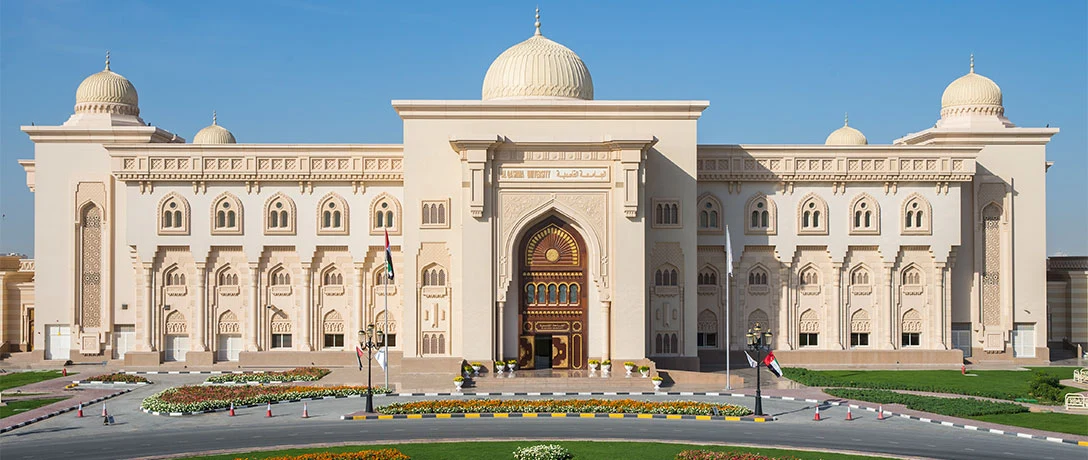
Al Qasimia University offers a distinctive way of understanding Sharjah’s educational identity. Its institutional purpose centres on Arabic and Islamic scholarship while welcoming an international intellectual community. Language, textual study and the relationship between heritage and contemporary questions are therefore central to the experience. A prospective student should consider both the academic discipline and the linguistic preparation necessary to participate fully in that environment.
A founding vision with a clear intellectual centre
The university’s own account dates its foundation to Decree No. 2 of 2013, issued by His Highness Sheikh Dr. Sultan bin Mohammed Al Qasimi. This is the founding date used here; later dates associated with accreditation or the start of particular colleges describe different milestones. Keeping those distinctions visible is essential to an accurate institutional history.
The institution presents itself as an Islamic-Arabic university open to the world. In educational terms, that identity invites serious work on sources, language and interpretation, alongside engagement with contemporary social and economic questions. Its significance should be examined through actual teaching and scholarship rather than reduced to architecture or ceremonial description.
Colleges and the disciplines they connect
The institutional overview identifies colleges concerned with the Holy Quran, Sharia and Islamic studies, arts and humanities, communication, and economics and management. The accreditation page lists degree pathways in areas including Arabic language and literature, jurisprudence, foundations of religion, mass communication, economics, Islamic history and Quranic studies.
These are related but distinct academic pursuits. A student interested in Arabic literature should examine literary analysis, language study and research methods. A communication applicant should ask about media practice and critical analysis. A student choosing economics should review the quantitative and theoretical sequence rather than assuming that every programme within the institution shares the same methods or career direction.
Language preparation as academic preparation
The Language Center supports students who do not speak Arabic as a first language. Its published pathways distinguish everyday communication, language for academic or specialist purposes, and enrichment for students who require additional development. Specialist language work is connected to fields such as religious studies, literature, economics and media.
This matters because conversational confidence and academic readiness are different. Reading a complex source, constructing an argument and producing a properly referenced paper require sustained language development. Applicants should ask how placement is determined, how progress is assessed and how preparatory study affects the overall duration of their route into a degree.
Campus and the culture of scholarly study
The university describes a University City campus with colleges, a library, a House of Islamic Manuscript, an auditorium, a mosque and residential halls. These facilities express the relationship between formal teaching, source-based study and daily university life. Their educational value depends on access, supervision and the habits students develop in using them.
A visit should include questions about library collections relevant to the intended discipline, research support and the rules governing access to specialist materials. For an international student, accommodation and orientation are also academic issues: a stable daily environment makes it easier to concentrate on an unfamiliar language and a demanding course of study.
The scholarship model and its obligations
The published scholarship policy is directed to eligible international students admitted from outside the UAE. It describes support categories that can include a stipend, residence procedures, insurance and housing, subject to the university’s conditions. Those categories should not be converted into a universal promise or a monetary package without an individual award decision.
Continuation rules are integral to the offer. The policy addresses academic performance, full-time commitment, attendance and the completion of language preparation where required. Applicants should read the entire policy, ask about their particular circumstances and keep the written award. Funding can change the affordability of study, but it also creates responsibilities that must be understood before travel.
Who should explore this university closely?
Al Qasimia deserves close attention from applicants seeking a serious relationship with Arabic and Islamic learning, and from those considering the specific communication or economics pathways listed by the institution. The strongest fit is intellectual as well as financial: students should be willing to engage with the language, methods and expectations of their chosen field.
Before accepting an offer, compare the degree plan, teaching language, preparation requirements and intended next step. Prospective postgraduate applicants should confirm the current availability and entry conditions of the exact master’s programme. A listed degree, a scholarship policy and an open application window are three different pieces of information and should be checked separately.
Pathways worth exploring.
This is an orientation to the academic landscape, not an exhaustive catalogue or confirmation of open admissions. Use the official resources below to verify the exact award and current entry conditions.
| Field or pathway | What to investigate |
|---|---|
| Quranic studies | The published degree record includes Quranic readings and exegesis-related pathways. Examine the language, source study and specialist requirements attached to the exact qualification. |
| Sharia and Islamic studies | Degree routes include jurisprudence and its foundations and foundations of religion. Compare their distinct intellectual questions, required preparation and the progression between undergraduate and graduate study. |
| Arabic language and literature | Arabic study calls for close reading, linguistic understanding and sustained written argument. Check the relationship between preparatory language provision and entry into degree-level literary or linguistic work. |
| Communication | The accreditation resource includes mass communication. Applicants should inspect practical and theoretical components, the language of production and the nature of assessed media work. |
| Economics and civilisation studies | The record includes economics and civilisation and Islamic history. These are separate pathways; compare the specific study plan and methods instead of reading them as one combined degree. |
Build your own decision record.
Programme and qualification
Record the exact award, level, teaching language, campus and intended intake. Keep a dated copy of the programme plan and entry conditions so that different institutions can be compared on the same basis. Ask about course sequencing, final assessment and practical or research requirements, including how additional preparation could affect the duration of study.
Cost and funding
Request current tuition and compulsory charges, then include accommodation, transport, materials and insurance where applicable. Separate confirmed figures from estimates and read deposit, instalment, refund and deferral terms. Do not deduct a potential scholarship from the budget until it is confirmed in writing, with coverage, continuation and exclusions understood.
Visit and unresolved questions
Prepare questions specific to the programme and record the answer, the responsible office and the date. Confirm practical arrangements, support, accessibility and supervision, together with later recognition where relevant. A useful visit goes beyond the appearance of the buildings: it helps explain how you will learn and manage an ordinary study week.
Questions that matter.
Which founding date does this profile use?+
The university’s own institutional account identifies Decree No. 2 of 2013. Dates relating to the start of teaching, a college or accreditation are separate milestones. This profile keeps those events distinct rather than treating different dates as interchangeable.
Is scholarship support automatic for every applicant?+
No. The published policy applies to eligible students under specified admission and continuation conditions. Verify your individual eligibility, the written award and the rules for academic progress and full-time commitment before making travel or financial plans.
Does Arabic preparation replace degree admission?+
No. Preparation and degree entry are related but separate stages. Ask how placement, successful completion, available academic seats and the requirements of the intended college determine progression. Confirm the maximum permitted preparation period directly with the university.
Official resources for this portrait.
Institutional facts are grounded in the resources below. Interpretation and comparison guidance are independent editorial content. Programmes, fees and admission conditions may change after the review date.
- Foundation and campus ↗
- Academic accreditation and degrees ↗
- Language centre ↗
- Language pathways ↗
- Scholarships and continuation rules ↗
- Arts and humanities ↗
An independent editorial portrait. Inclusion does not imply endorsement, partnership or an admission offer from the institution.