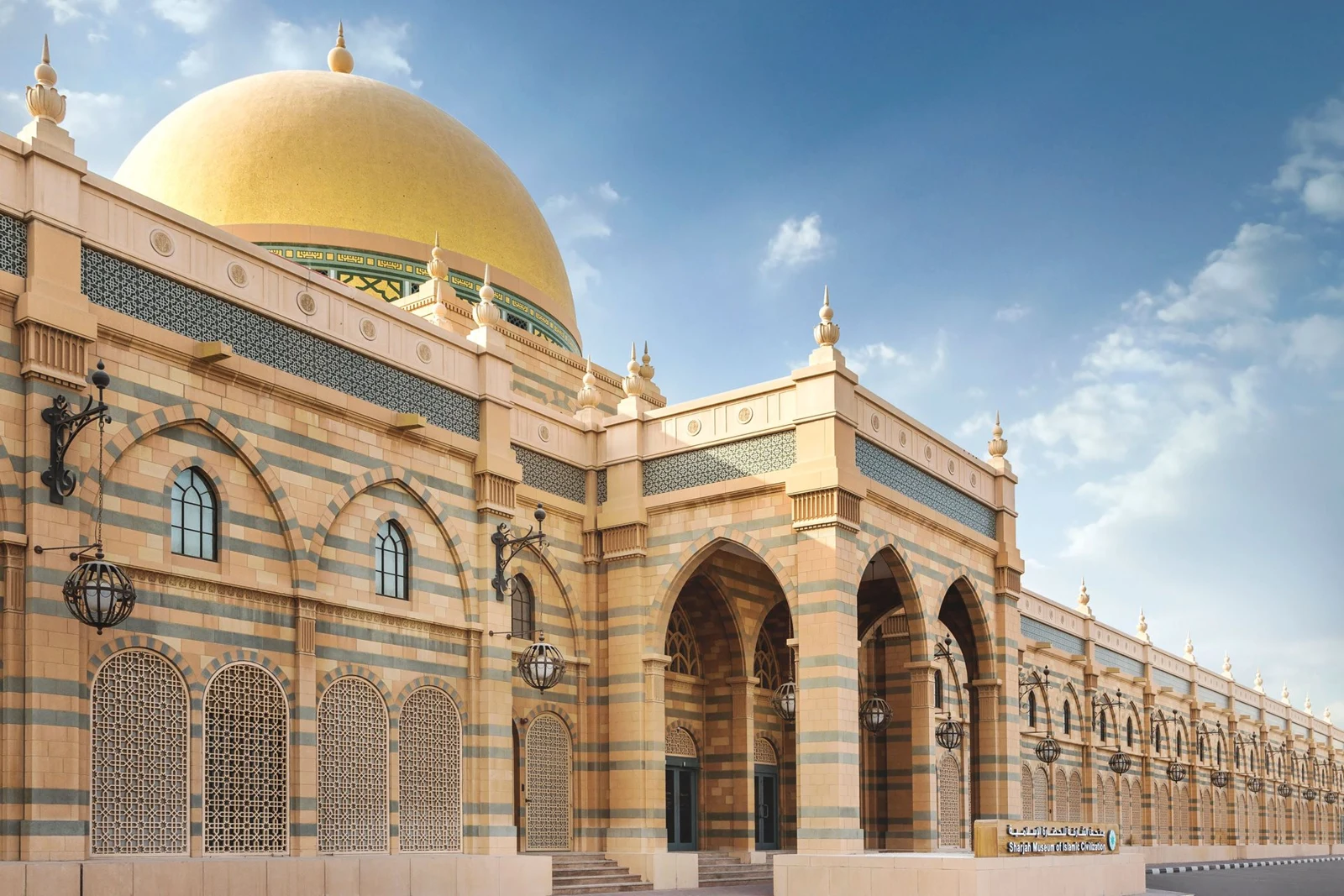
A place in Sharjah’s knowledge landscape
Sharjah Museums Authority locates the museum in Al Majarrah and dates its reopening in the former souq building to June 2008. The institution presents Islamic faith, art and material culture alongside the Ibn Al Haitham Gallery of Science and Technology. Its official page is the source for collections, access and current visiting information. Educational group arrangements should be requested through the museum authority rather than inferred from an ordinary visitor ticket.
What a learner can investigate
Objects offer a disciplined alternative to learning history only through summaries. Ask what an object is made of, what its form suggests and which details support a conclusion about its use. Separate what can be observed from what the label or another source explains. A careful interpretation should leave room for uncertainty.
The science and technology dimension makes a connection between cultural history and contemporary education. Students can investigate how observation, measurement, navigation or mathematical reasoning relate to a displayed idea. Avoid treating an inspiring historical achievement as a reason to skip evidence. The useful question is how a particular instrument, model or account helps us understand a problem and the people who worked on it.
An independent learning route
Independent learning route: select one object and one scientific theme. Make an observation sheet with three columns: what I see, what the museum explains and what I still need to verify. After the visit, compare the theme with a modern application without assuming that the two objects or methods are identical.
For teachers, define a narrow learning objective before requesting a group visit. Ask about language, accessibility, age suitability, permitted materials and the difference between a guided session and self-led access. Check the authority’s current page for opening arrangements and any special-date changes. This editorial activity is not an official museum lesson plan or a reserved programme.
Plan around a clear learning purpose.
Define the age group, subject, language, visitor number and intended outcome, then ask the venue about access, booking, current hours and charges. A description of collections or facilities does not establish unrestricted availability to every visitor.
Before a visit, prepare a question; during it, gather observations; afterwards, discuss what changed in the learner’s understanding. A teacher can connect the experience to a small classroom task with clear evidence. These suggestions are not booked institutional programmes or existing collaboration agreements.
Original references.
Last checked: 31 October 2026. Confirm changing visit details directly.